
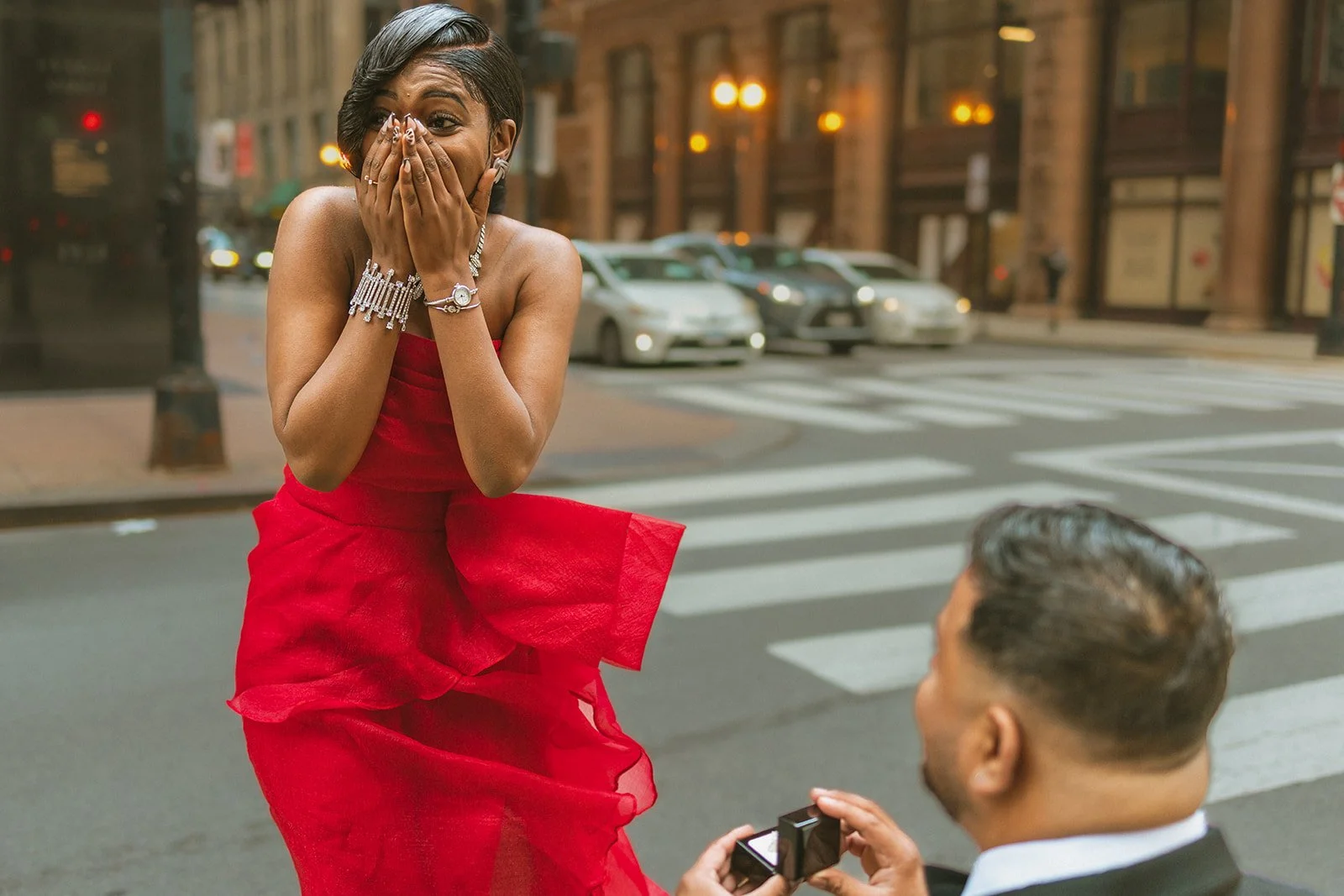
A Cinematic Guide
The Art of the Proposal
A proposal is a scene with one true beat. Thoughtful pacing is what makes it feel effortless.
Some cities ask for spectacle. Chicago asks for timing.
The river goes dark before the sky does. Glass holds the last light. A bridge lifts just long enough to interrupt a sentence. Someone turns toward it.
A proposal is not a production in the loud sense. Not a flower wall. Not a crowd waiting for its cue. It is a scene with one true beat. Approach. Pause. Breath. The question. Then the world returning, changed by a fraction.
Most proposal advice mistakes recognition for meaning. It assumes that if a place is famous enough, the moment will inherit significance from the address. Chicago does not work that way. A proposal at Olive Park and a proposal on the Riverwalk can happen at the same hour with the same skyline and feel like completely different nights.
The best Chicago proposals are not the most photographed locations. They are the ones whose scale, pace, and light match the two people inside them.
What matters is the behavior of the setting. How light moves through a space. How the room receives a small private moment. How the edges of the frame shape what your partner notices first. This guide treats those choices as the actual work, not as garnish on a planning checklist.
Over the past several years, I've helped capture more than 300 Chicago proposals. The lessons here come from what those moments taught me about what actually holds up. Not what photographs cleanly in the first ten minutes, but what can hold its own after the adrenaline has passed.
How do you choose a location that does emotional work?
The wrong question is "what is the most beautiful spot in Chicago." That question has too many right answers and none of them are yours. The better question is what the location does to a body standing inside it. A place can make you feel held or scrutinized, lifted or compressed, alone with someone or visible to strangers. Those are not interchangeable feelings.
In practical terms, the best proposal location is one where three things align: scale (how big the space feels around you), behavior (how the light and crowd move through it), and edge (what ends up in the frame and what quietly falls away).
The same hour at two different Chicago locations produces two different proposals. Milton Lee Olive Park, with its peninsula geometry and open lakefront, gives you scale and space. Your partner stands inside a wide, generous frame that feels almost theatrical in its openness. The Riverwalk near State Street, by contrast, encloses. Stone retaining walls compress the air. The river narrows the world. Both are beautiful. They feel different.
The city's most-photographed proposal spots are not always the right ones for the specific people standing in them. Cloud Gate at golden hour photographs reliably, but it photographs with a hundred other people in the frame. Buckingham Fountain delivers a postcard, but it delivers a crowded postcard. These spots reward exposure and energy. They struggle to deliver intimacy.
When I help shape a proposal, I am paying attention to how a space feels before I think about how it photographs. The photographs follow from the feeling, not the other way around.
What is the right pace for a proposal moment?
Timing is not a clock question. It is a pace question. The same minute can feel like a held breath or a rushed exit depending on what came before it. A proposal at 7:14 PM and a proposal at 7:18 PM are not the same proposal if one of you arrived from a tense rideshare and the other has been walking quietly along the lake for twenty minutes.
The short version: most outdoor Chicago proposals look and feel best about 60 to 90 minutes before sunset. That window gives you enough light for the moment itself and enough time afterward for portraits while the city is still glowing.
Inside that window, pace is what actually changes the feel of the moment. The walk from the car. The pause at a railing. The unhurried turn of the head when your partner senses the air has shifted. None of these are accidents in a well-shaped proposal. They are the rhythm of the scene, not its accessories.
| Season | Sunset window | How this light feels |
|---|---|---|
| April / May | 7:30 – 8:15 PM | Tender, lengthening, optimistic |
| June / July | 8:15 – 8:35 PM | Theatrical, generous, slow to fade |
| August / September | 7:30 – 8:00 PM | Honeyed, settled, slightly elegiac |
| October / November | 5:45 – 6:30 PM | Gold leaf, short, deeply atmospheric |
| December / February | 4:30 – 5:30 PM | Silver, melancholy, architectural |
The proposal itself is brief. The story you carry from it is shaped by what surrounds the question, not just the question. That is why pace matters more than the precise minute on the clock.
How do you build a natural approach that doesn't betray itself?
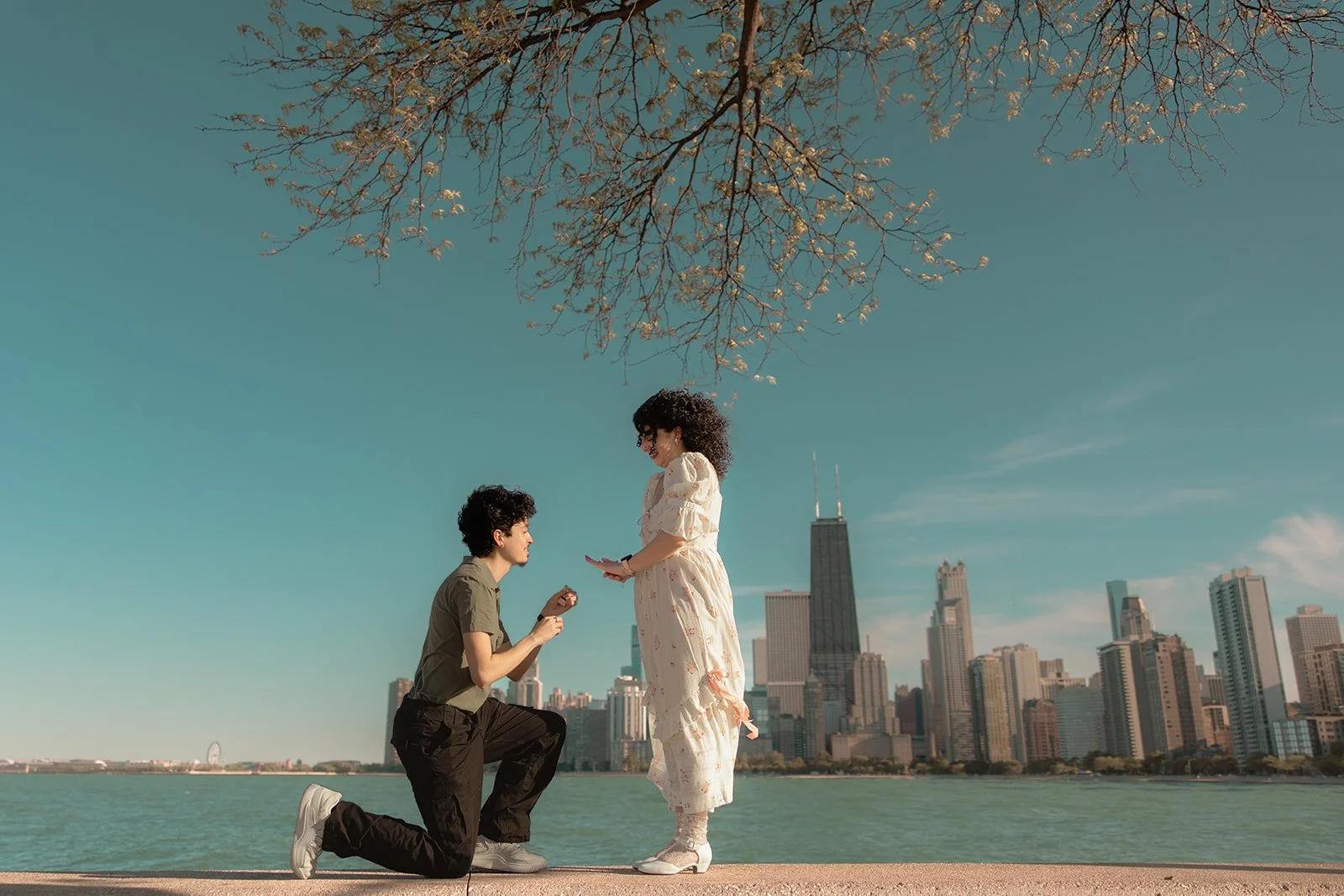
A cover story is not deception. It is an approach that feels true. The right approach delivers your partner into the right scale and the right pace without alerting them that anything has shifted. The plan should feel exactly like something the two of you would normally do together, right up to the threshold of the moment itself.
The best cover story feels exactly like something you already do together. It only becomes unforgettable at the moment you stop walking and the scene tips into something new.
Three approaches work consistently in Chicago because they fold seamlessly into things couples already do.
The Dinner Detour. A reservation at a restaurant. A short walk before or after to see the water. The proposal happens during the walk, not the dinner. The cover story is the meal. The real event is the moment between courses, when nobody expects the night to shift.
The City Discovery. "I read about this hidden spot, want to check it out before we head back?" Works especially well when your partner already trusts you to find interesting places. The investigation itself is the cover. The discovery is something else entirely.
The "You Always Say." Anchors to something your partner has said about a particular spot, view, or restaurant. "You always say you want to come back here when the light is like this." It rewards their own attention to the city. The proposal becomes the answer to a sentence they didn't realize they were finishing.
What separates a good approach from a brittle one is how easily it could fail without anyone noticing. If the plan still works as a normal evening even if the proposal didn't happen, the approach is honest. If the plan only makes sense as a setup for the proposal, the structure shows.
We'll build yours together on the planning call. The right approach is always specific to the two of you, not borrowed from a template.
What does negative space have to do with a proposal photograph?
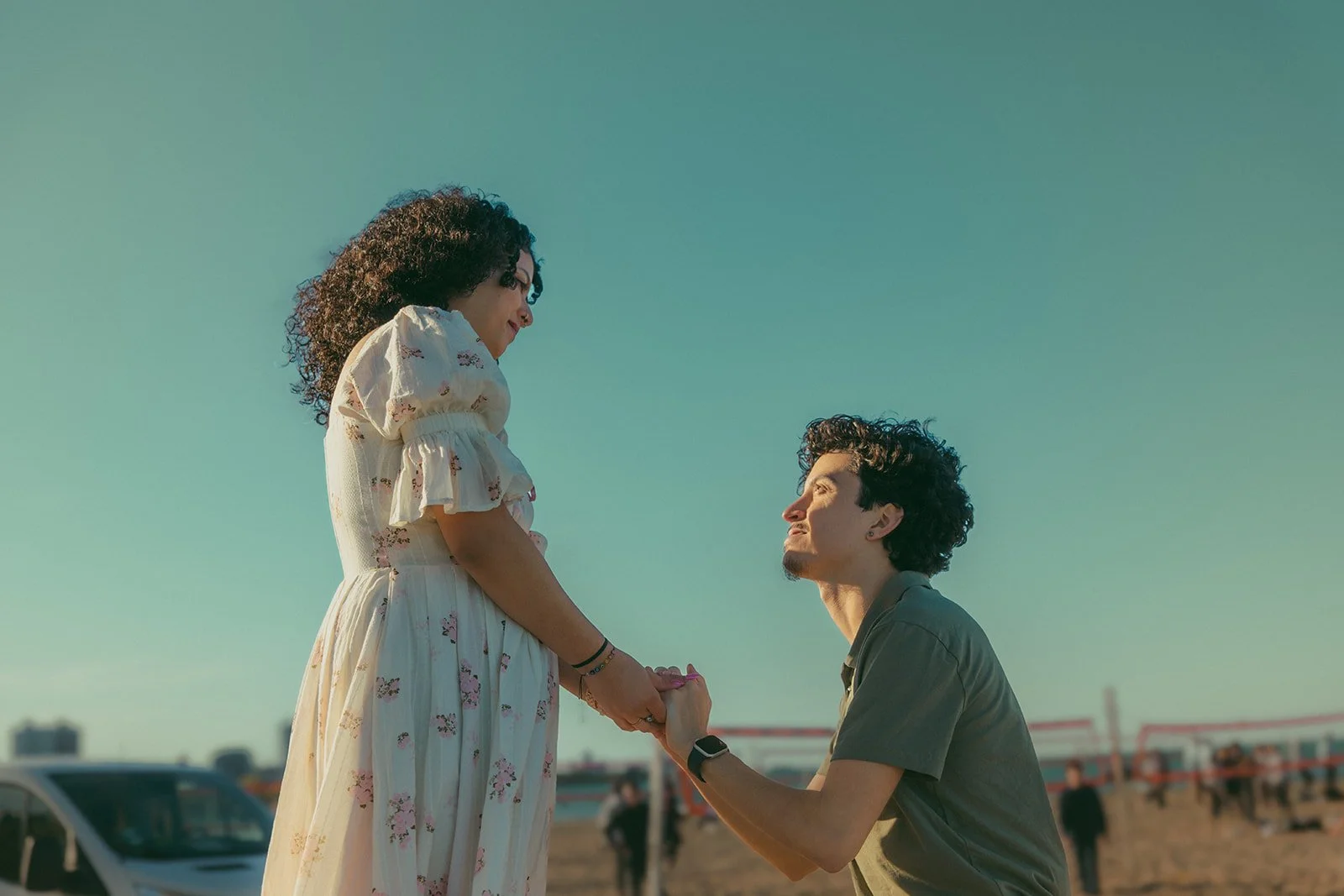
Negative space is what a photograph leaves out. The empty water above a horizon line. The unlit window beside an illuminated one. The pause between two figures that lets you feel the air between them. In proposal photography, negative space is also strategic. It is what keeps the moment private even though strangers might be standing fifty feet away.
In Chicago, privacy almost never means being literally alone. It means having enough negative space around your moment that the people who happen to be nearby fall out of your awareness and out of the frame.
This is why some of the city's most-cited proposal spots fail their own users. They are visually congested. They reward postcards, not intimacy. The frame is full of other people doing other things. The architecture insists on being noticed. There is no quiet room around the couple.
Chicago gives you scale for free. The work is knowing when to ask it for intimacy. A wide lake horizon. A long colonnade. A bridge that compresses the world into a single line of stone and water. These features create the negative space that lets a small private moment register as the only thing in the frame, even when it isn't.
When I'm shaping a proposal, I'm looking for places where you can borrow the city's energy without letting it swallow the two of you. The right location is not just photogenic. It is generous with its silence.
How does Chicago light shape what a proposal will feel like?
Light is not neutral. It is mood you can predict. October light in Chicago is the color of old gold leaf. June light at 7:30 PM is wide, generous, almost theatrical. February light at 4:00 PM is silver and short, with the kind of melancholy that makes everything feel like it matters more.
Spring and fall favor open lakefront and skyline locations. Summer evenings hold up beautifully in busier downtown spaces. Winter light favors architecture and indoor locations that play well with shadow.
The lakefront orientation matters more than people expect. Sun setting in the west means lakefront locations photograph with backlit warmth on the water and on your partner. River locations catch reflected light from glass facades, which softens the city without flattening it. Garden locations, like the conservatories, hold their own light entirely. They are the city's answer to weather.
Chicago weather is a collaborator, not an obstacle. Overcast diffuses light into a soft envelope that flatters every skin tone. A passing rain leaves the streets reflective for an hour afterward. Snow holds light differently than anything else in the year. The forecast is rarely a reason to move the proposal. It is often the reason a particular night becomes unforgettable.
How does a photographer disappear from a moment they are documenting?
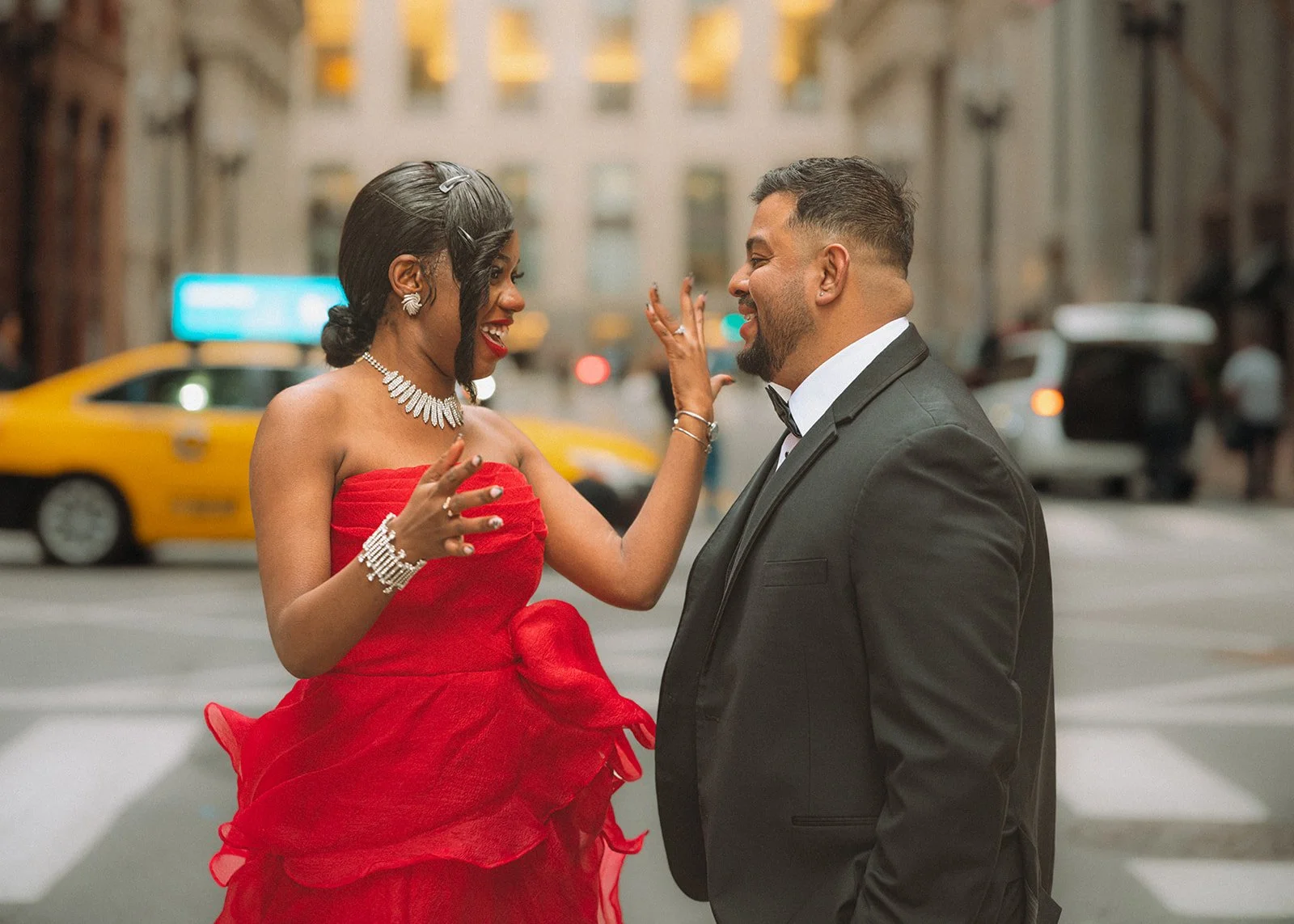
Disappearing well is a craft. A photographer who hides poorly looks suspicious, which is worse than being visible. A photographer who hides well becomes part of the environment. A bench, a railing, a tree, a tourist with a long lens looking the wrong direction until the right moment.
Practically, that means I arrive 30 to 45 minutes early, choose a position that looks like it belongs there, and start photographing before you ever step into the frame. You do not need to look for me or signal me. You stay with your partner. I stay inside the negative space.
The pre-arrival ritual is the work that makes the invisibility possible. Walk the location. Find the sightlines. Notice where the light will land in twenty minutes when you arrive. Claim a position that a normal photographer would believably occupy. By the time you walk into the scene, I am part of it.
The signal between us is a single one-word text when you are five minutes out. No conversation. No instruction. You proceed as if nobody is watching. I confirm I'm ready, then I disappear into the photograph.
Across more than 300 Chicago proposals captured since 2019, the surprise has held every time.
What happens in the thirty minutes after the question?
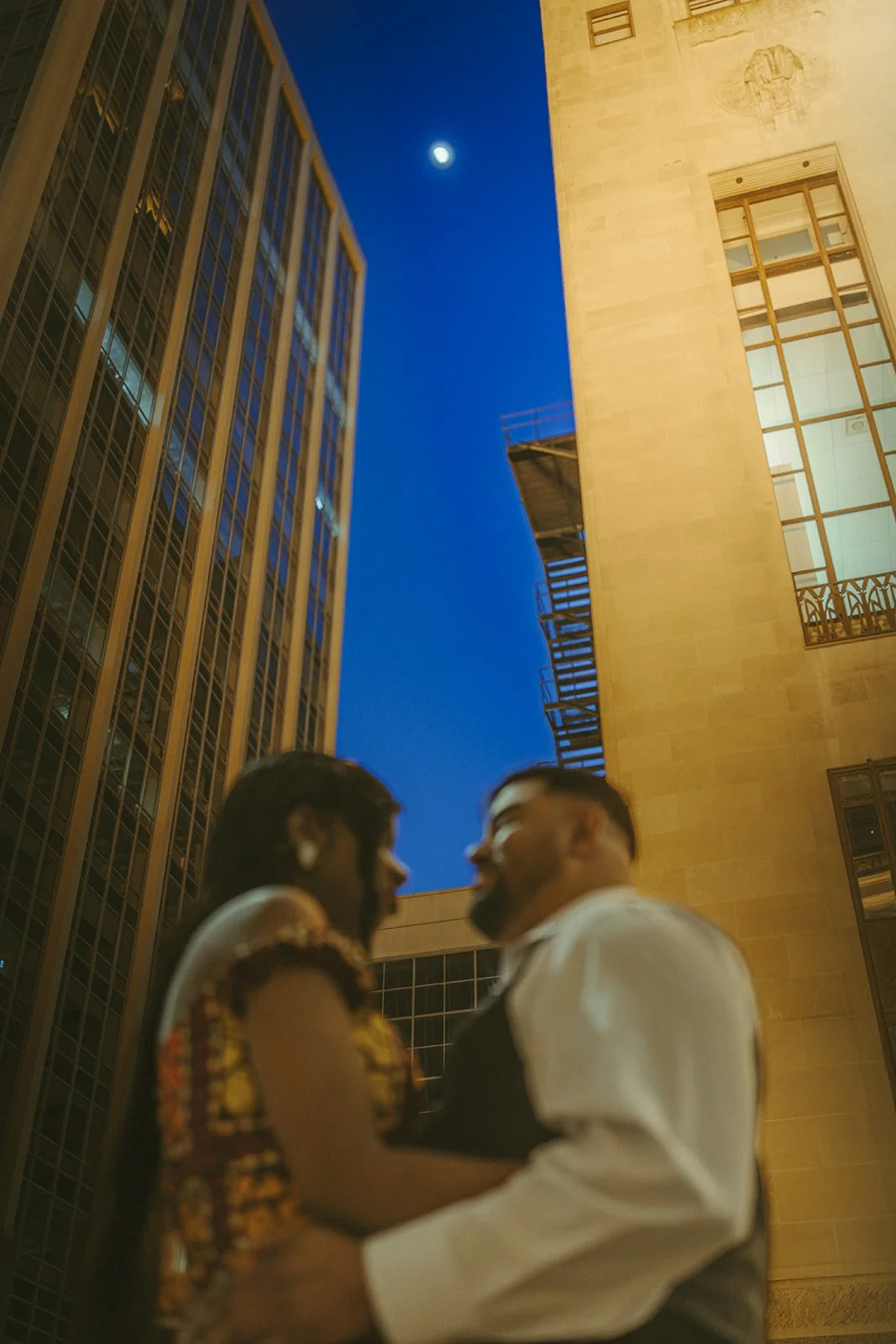
The proposal itself is brief. Often less than ninety seconds from approach to embrace. The thirty minutes that follow are where most of the gallery is actually made. Phone calls to the people who matter. The two of you standing inside the news. A walk to the next location. A pause on a bridge because nobody knows what to say yet.
The post-yes window is the part of a proposal session that separates good photographs from images you will frame and keep on a wall for the rest of your life.
Most photographers treat this window as portrait time. Stand here. Look at each other. Try not to look at the camera. The result is a gallery that captures the proposal cleanly but loses the celebration entirely.
This is where my theater background does the most work. It taught me how to create ease. I am not asking you to perform. I give you something real to do, walking, talking, holding each other, calling the people who matter, so you stay with each other instead of suddenly performing for the camera. The comfort is what makes the photographs honest.
The phone calls are often the strongest frames in the gallery. The face of someone hearing the news for the first time, alive in your partner's expression as they listen. The unguarded laughter. The hand still on a railing for support. These are not posed. They are simply unguarded enough to be true.
How do you choose a creative partner for a proposal?
Most proposal photographers will show you a portfolio of moments and ask if you like the style. That is a fine starting place but it is not a sufficient one. Style is what a person has already done. The harder question is whether the photographer can articulate a point of view about how proposals should feel, and deliver it under pressure when the light shifts, the weather changes, or the cover story almost gets blown three minutes before the moment.
When you are choosing someone to document your proposal, you are not just picking a style you have seen on a website. You are choosing a creative partner who will help shape how the night actually feels.
Three questions worth asking any proposal photographer:
What do you do in the moments between the yes and the first real portrait? The answer tells you whether they treat the post-yes window as the heart of the session or as filler before the gallery begins.
How do you stay hidden, and what's your fallback if the location won't allow it? A real expert has a concrete answer for both. The fallback question separates photographers who have actually worked through location failure from those who have only succeeded in ideal conditions.
Who edits the gallery, and on what timeline? The hand on the edit shapes the final feeling of the work more than the camera.
Every TPS gallery is hand-edited by the photographer who captured it, with the same creative voice from the first frame to the last.
Sessions are custom-quoted to the scope of your vision. The most focused experience begins at $795 with twenty-five minutes of celebratory coverage. Most couples invest between $895 and $985 for longer post-yes windows, multi-location coverage, or fully private settings.
For couples who want something genuinely different, The Cinematic is captured by Jeremy alongside a senior associate, shooting simultaneously from different angles. The proposal moment exists in your gallery as both a wide environmental scene and an intimate close-detail study, at the same time. Investment begins at $1,795 and includes 2.5 hours of coverage, multi-location flexibility, and expedited highlights.
What about the wedding?
A proposal is the first scene in a longer story. The same creative attention that shapes the moment of the question can shape the moment you walk into your wedding. That is why The Proposal Studios and Jeremy Glickstein Photography operate as sister studios, with the same hand-editing, the same comfort-first approach, and the same person at the helm.
Couples who plan their proposal with The Proposal Studios receive an exclusive transition credit toward their Jeremy Glickstein Photography wedding commission.
If you decide to carry this direction into the wedding day, you'll have a head start. The way we've already learned to work together becomes the foundation for the rest of the story.
Frequently asked questions
What makes a Chicago proposal feel cinematic rather than generic?
The cinematic feeling comes from three things working together: pace, scale, and what the camera leaves out. Generic proposal photography captures the moment cleanly. Cinematic proposal photography captures the moment within a setting that has its own atmosphere, with deliberate negative space around the couple and a sense of time that extends before and after the question itself.
How is The Proposal Studios different from a typical wedding photographer doing proposals?
Most wedding photographers approach proposals as a short engagement-style shoot. The Proposal Studios treats them as their own creative form, with planning that addresses the specific anxieties of a surprise, hidden coverage built around the location's particular sightlines, and a post-yes window designed to capture the celebration as carefully as the question.
Do you give us direction during the portrait session, or do we just stand there?
You will not feel posed. You will feel guided. Standard portrait direction asks couples to perform connection. The Proposal Studios approach uses real activities, walking, talking, calling family, holding each other, to keep the two of you connected to each other rather than to the camera. The honest moments are the ones that make it into the wall-worthy frames.
What is the right time of year for a Chicago proposal if I care about how the photographs will feel?
Every season produces beautiful proposals in Chicago. Spring and fall favor open lakefront and skyline locations. Summer evenings hold up beautifully in busier downtown spaces. Winter light favors architecture and indoor locations that play well with shadow. The right season for you is the one whose light matches the feeling you want to remember.
Can I book a TPS session for a location that isn't on the popular Chicago lists?
Yes. Some of the strongest TPS sessions happen at locations that don't appear on the standard "best places to propose" articles. The right location is the one that fits the two of you, not the one with the highest tourist traffic. We can talk through under-the-radar Chicago spots on your planning call.
Do you handle the planning, or do I bring you a finished plan?
Bring whatever you have, and we'll build the rest together. Some couples come with a location, a time, and a cover story already worked out. Others come with an idea of how they want it to feel and we develop the specifics on the planning call. Either path leads to the same place: a moment that feels native to your relationship.
Is there a premium option for couples who want something beyond the standard session?
Yes. The Cinematic is The Proposal Studios' top tier, captured by Jeremy alongside one of his senior associates, working simultaneously from different angles. Your proposal moment is captured as both a wide environmental frame and an intimate close-detail study, at the same time. The session includes 2.5 hours of coverage, flexibility to move between two Chicago locations, and expedited highlights within 48 hours. The Cinematic is custom-quoted based on date and scope, beginning at $1,795.
What is the lowest-cost option if I just want the moment captured cleanly?
Collection 1 sessions begin at $795. Best for couples who want clean coverage of the moment itself without the extended experience. Most TPS couples invest more for the longer post-yes window and additional location variety.
What happens if the weather changes the morning of?
Chicago weather is a collaborator more often than an obstacle. Most outdoor proposals proceed in light rain, overcast, even early snow, because diffused light flatters the photographs and the city's atmosphere often improves with weather. In genuine severe weather, we have indoor backup locations identified during the planning call, including conservatories and architecturally rich indoor settings.
Can family or friends be nearby for the reveal?
Yes, with planning. Some couples have a small group waiting at a nearby restaurant or location for a celebration immediately after the yes. Others keep the moment private for the two of them and share the news later. Both work beautifully. We coordinate the timing and positioning of any family involvement on the planning call so it feels seamless rather than choreographed.
How far in advance should I book?
Three to six weeks is the ideal window for most Chicago proposals. That gives enough time for thoughtful planning without making the secret harder to keep. Last-minute bookings are possible when scheduling allows. The Cinematic, because it requires senior team coordination, typically books four to eight weeks in advance.
Ready to begin?
Tell me your date, your rough idea, and what the night already wants to be.
The planning conversation is a creative one, not a logistics call. We talk about what kind of evening this should feel like, then build everything around that.